Find every quantum-vulnerable connection.
Get continuous visibility into the cryptography your network actually uses. See which connections are exposed to quantum attack and which side needs to change, then remediate in priority order and export a CycloneDX CBOM.
Quantum readiness, always up to date.
Observers report as they see traffic and the guardian probes your TLS endpoints every six hours, so your inventory, migration plan and CBOM stay current without rescanning.
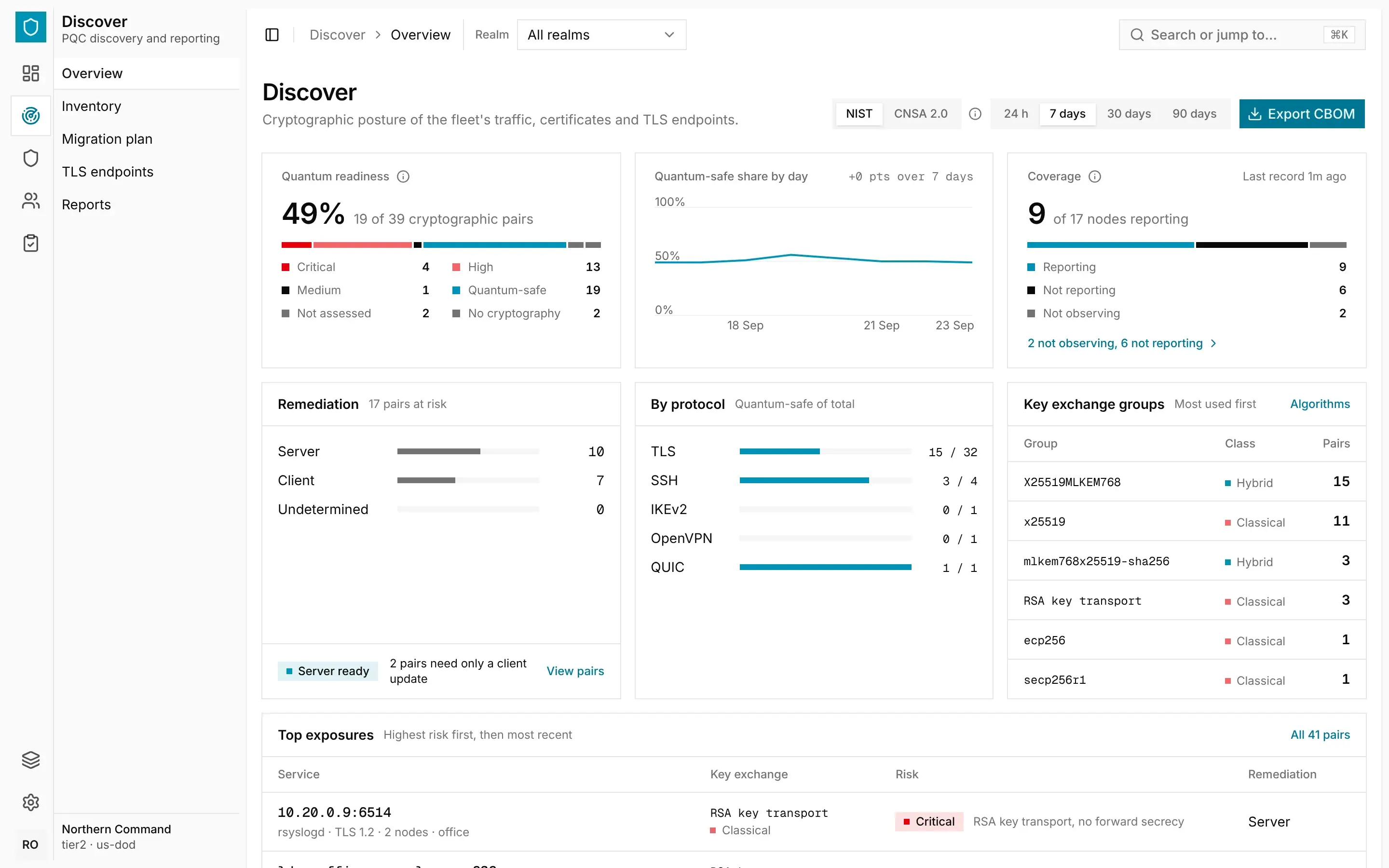
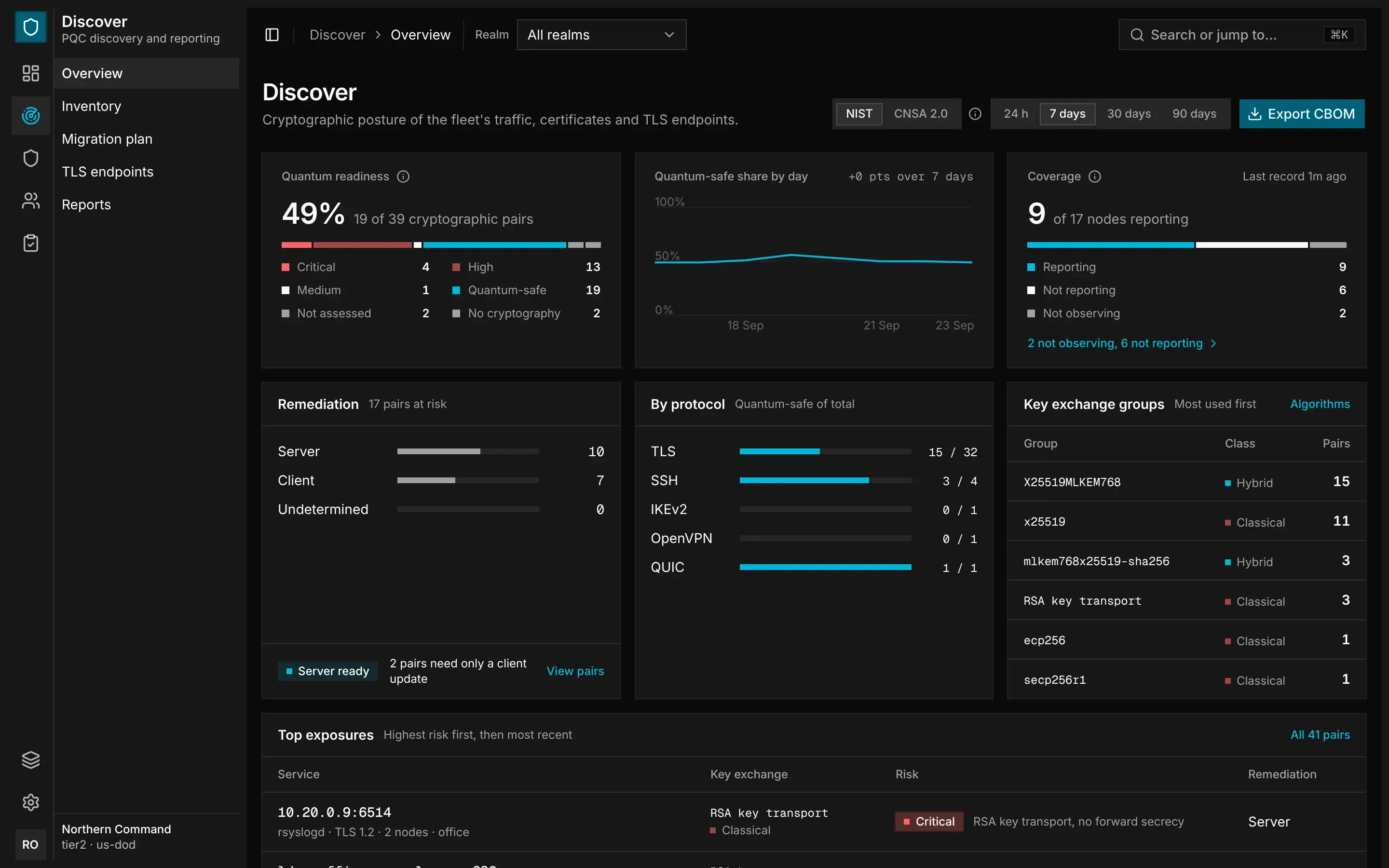
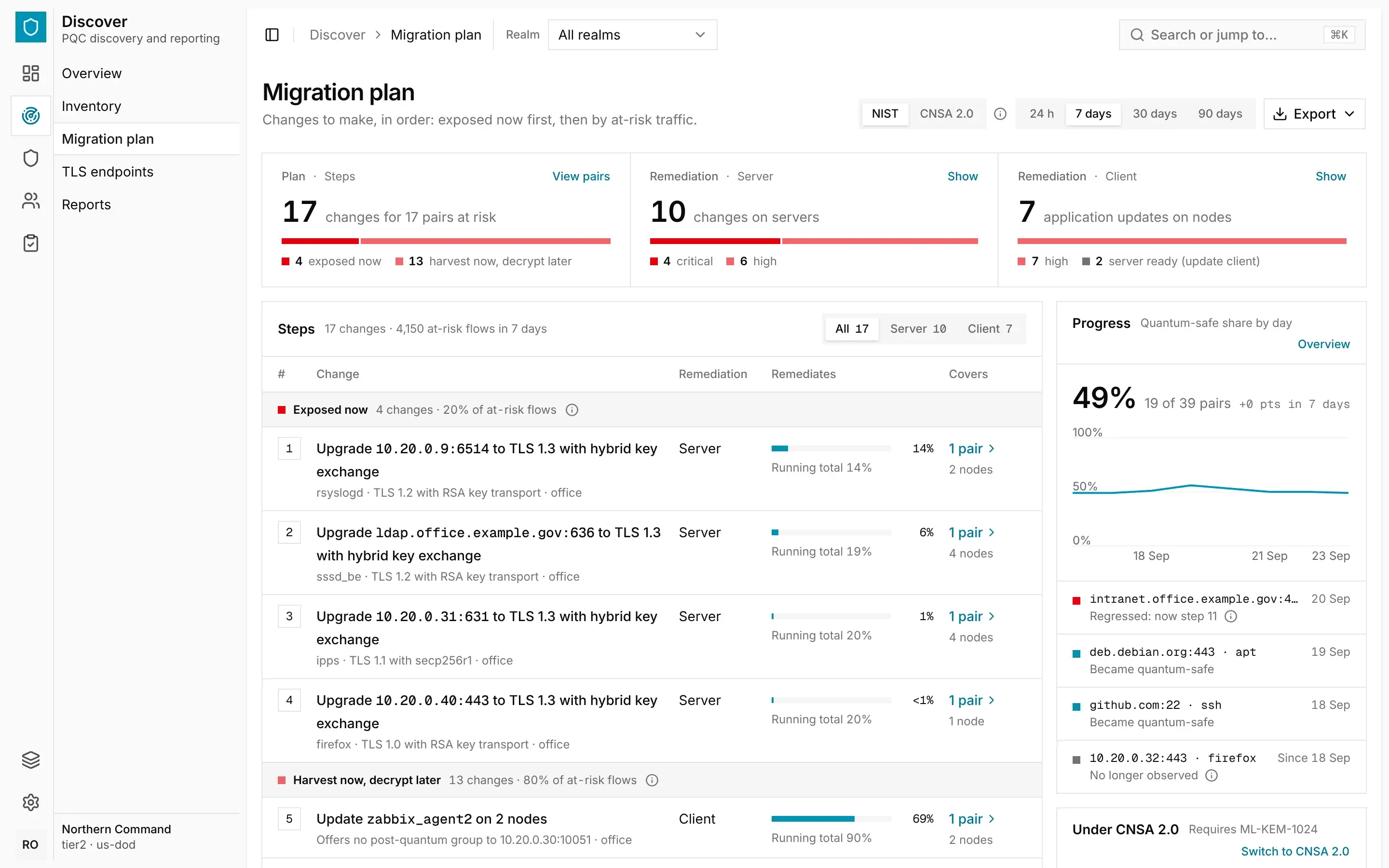
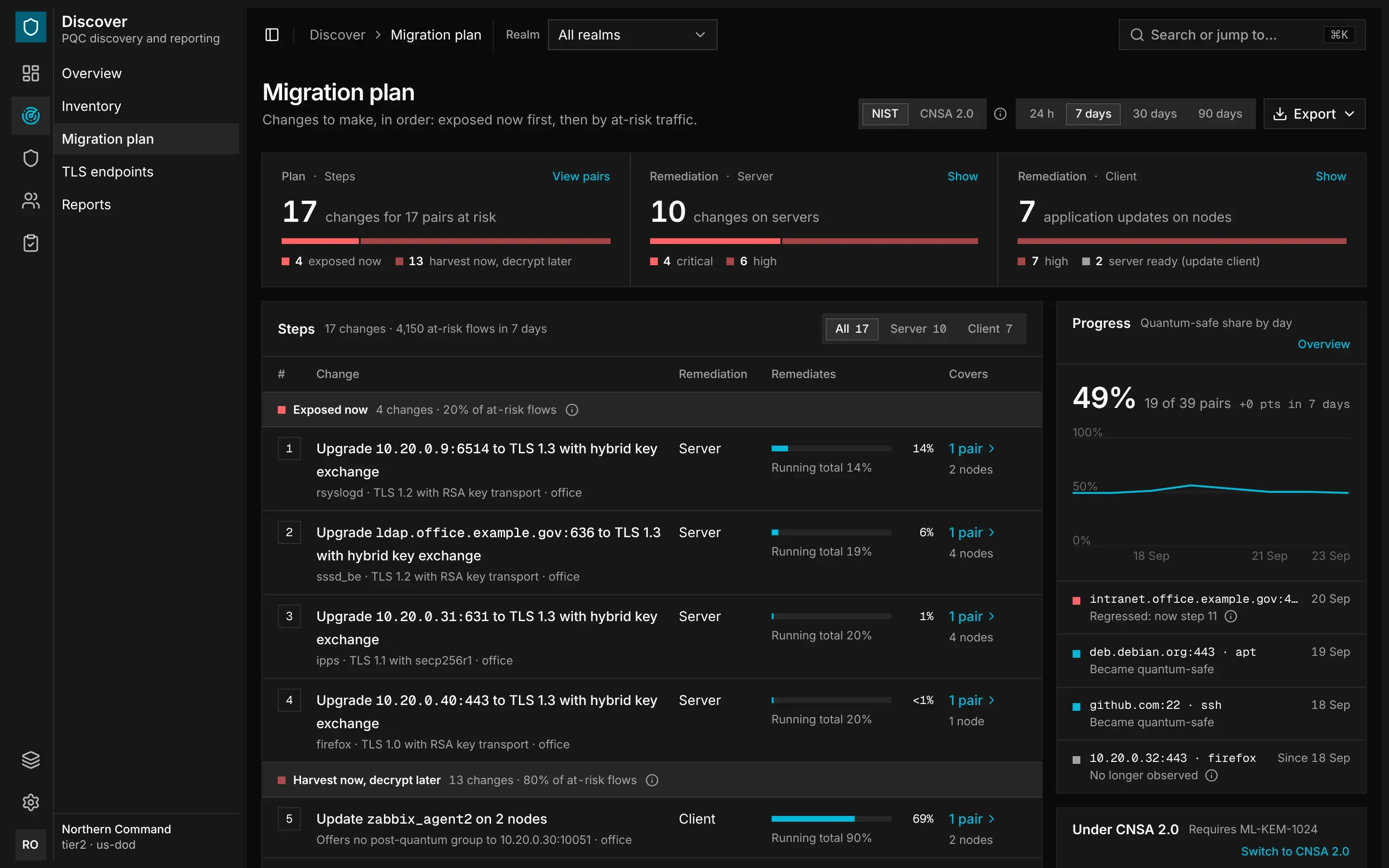
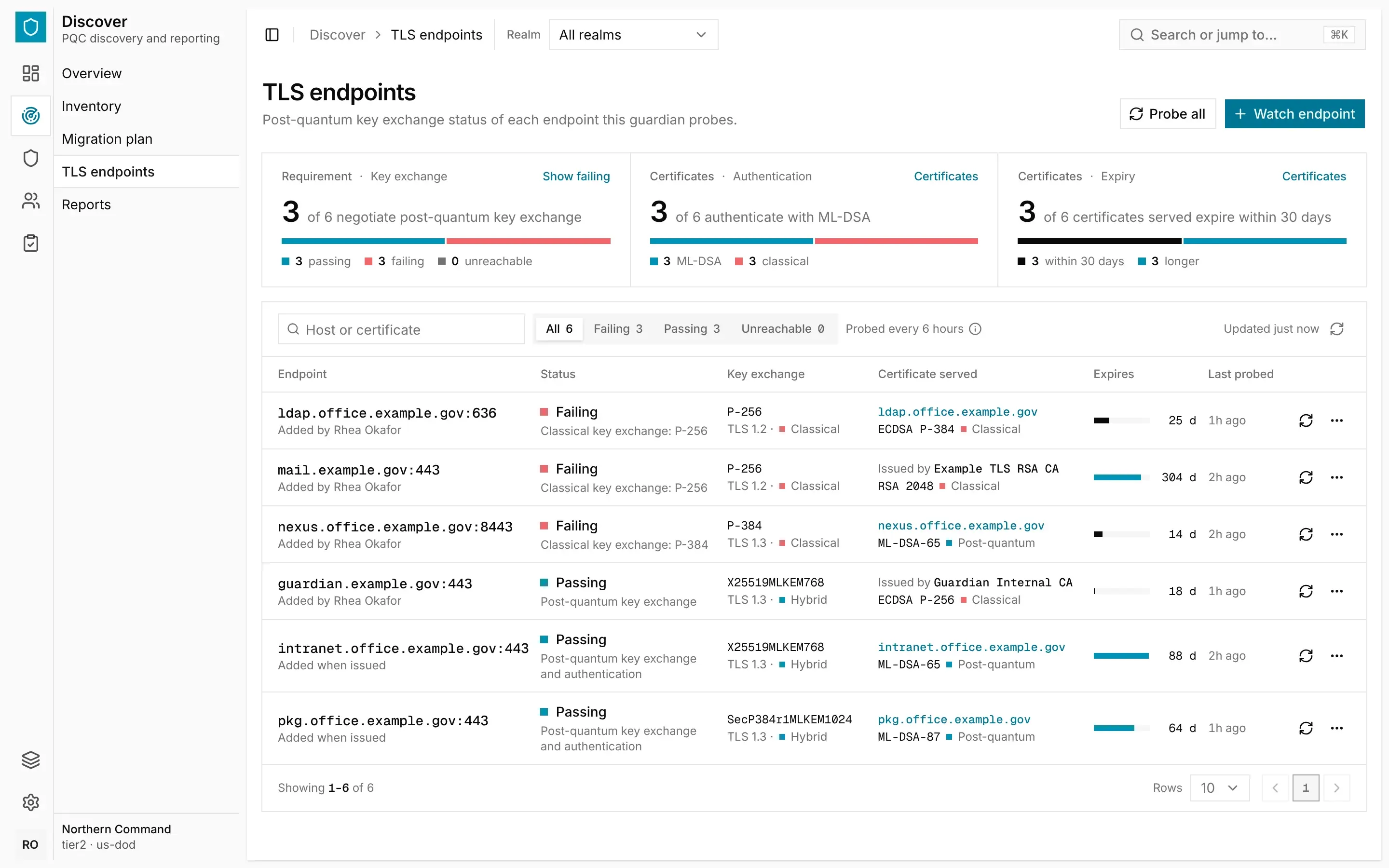
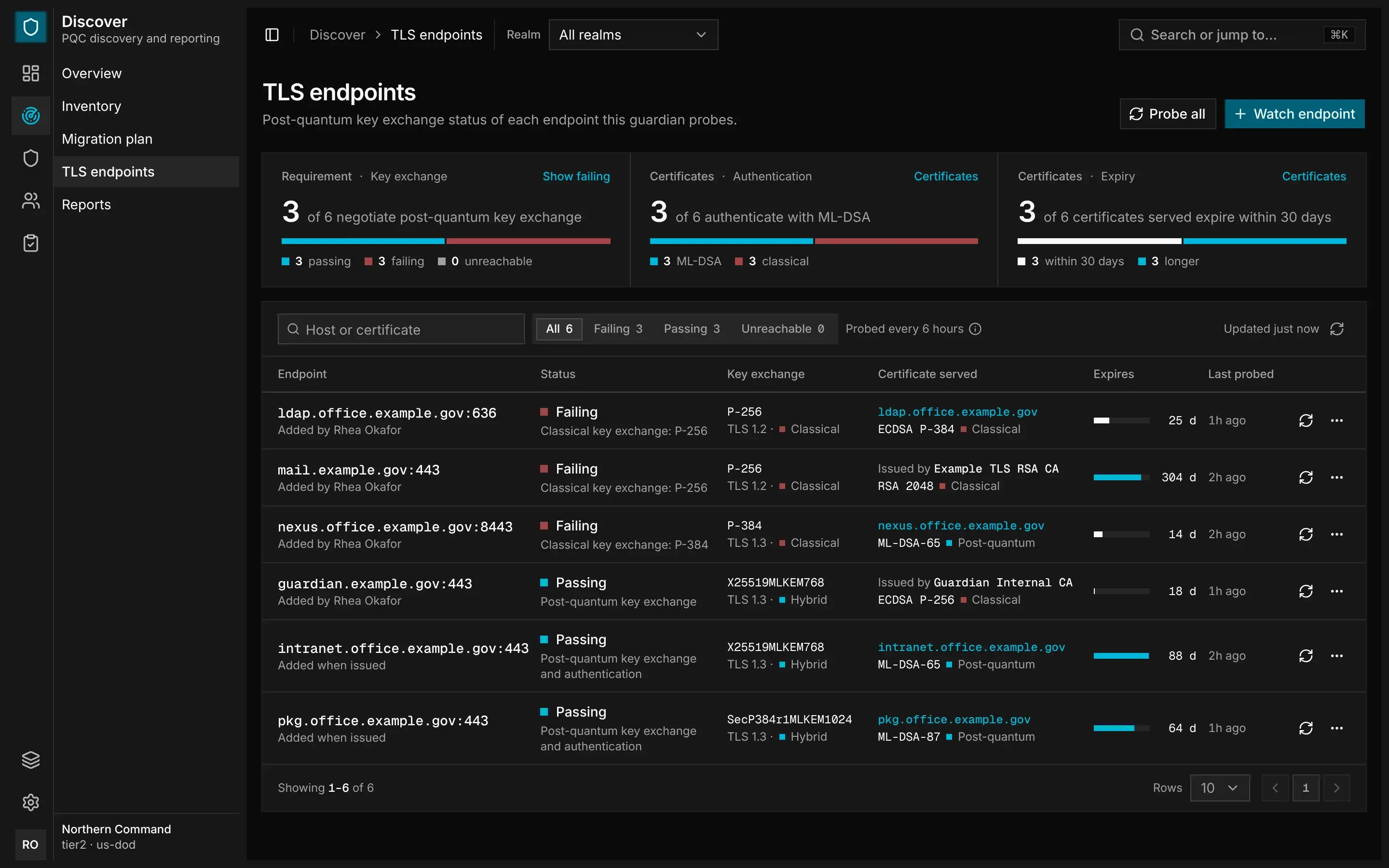
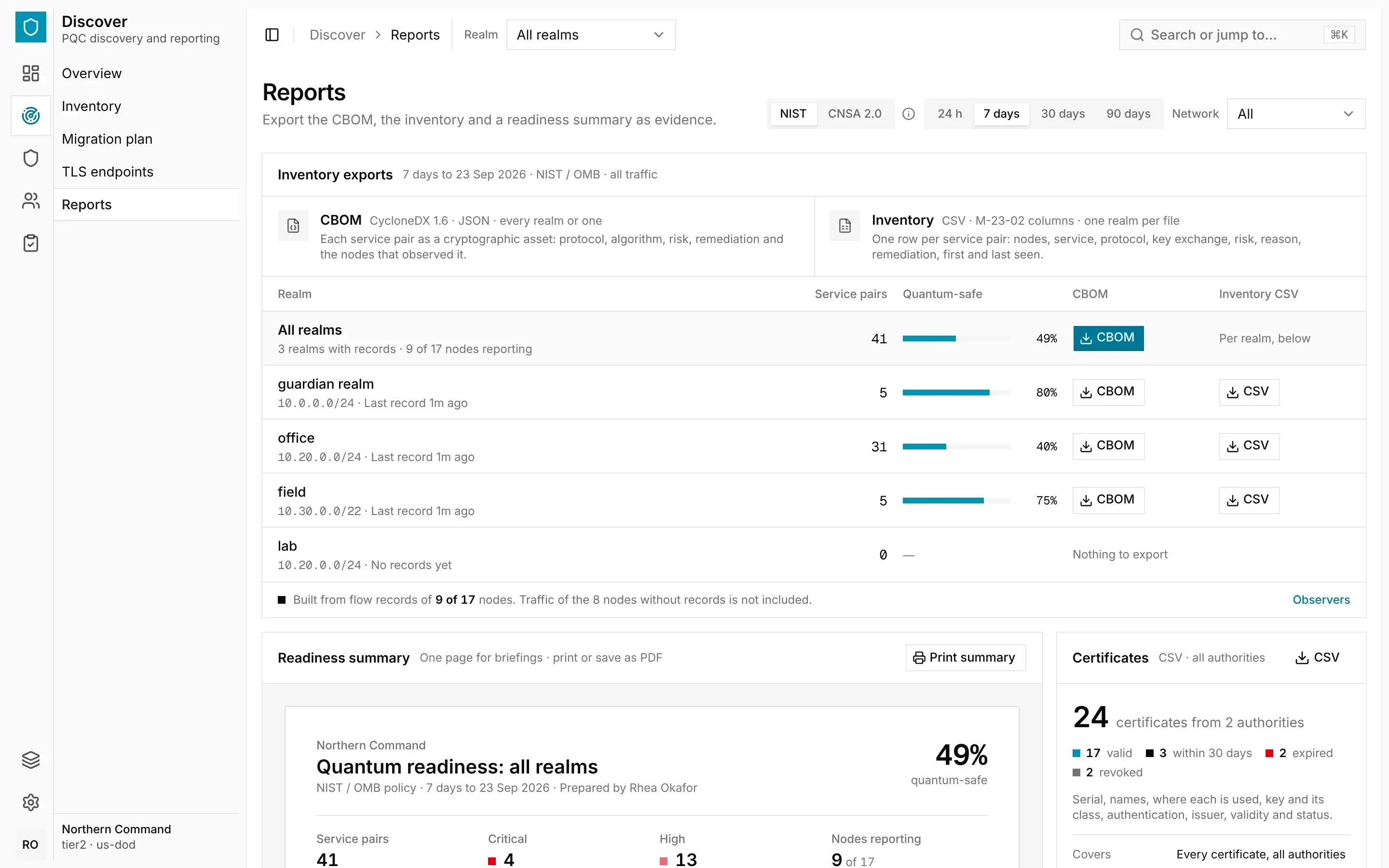
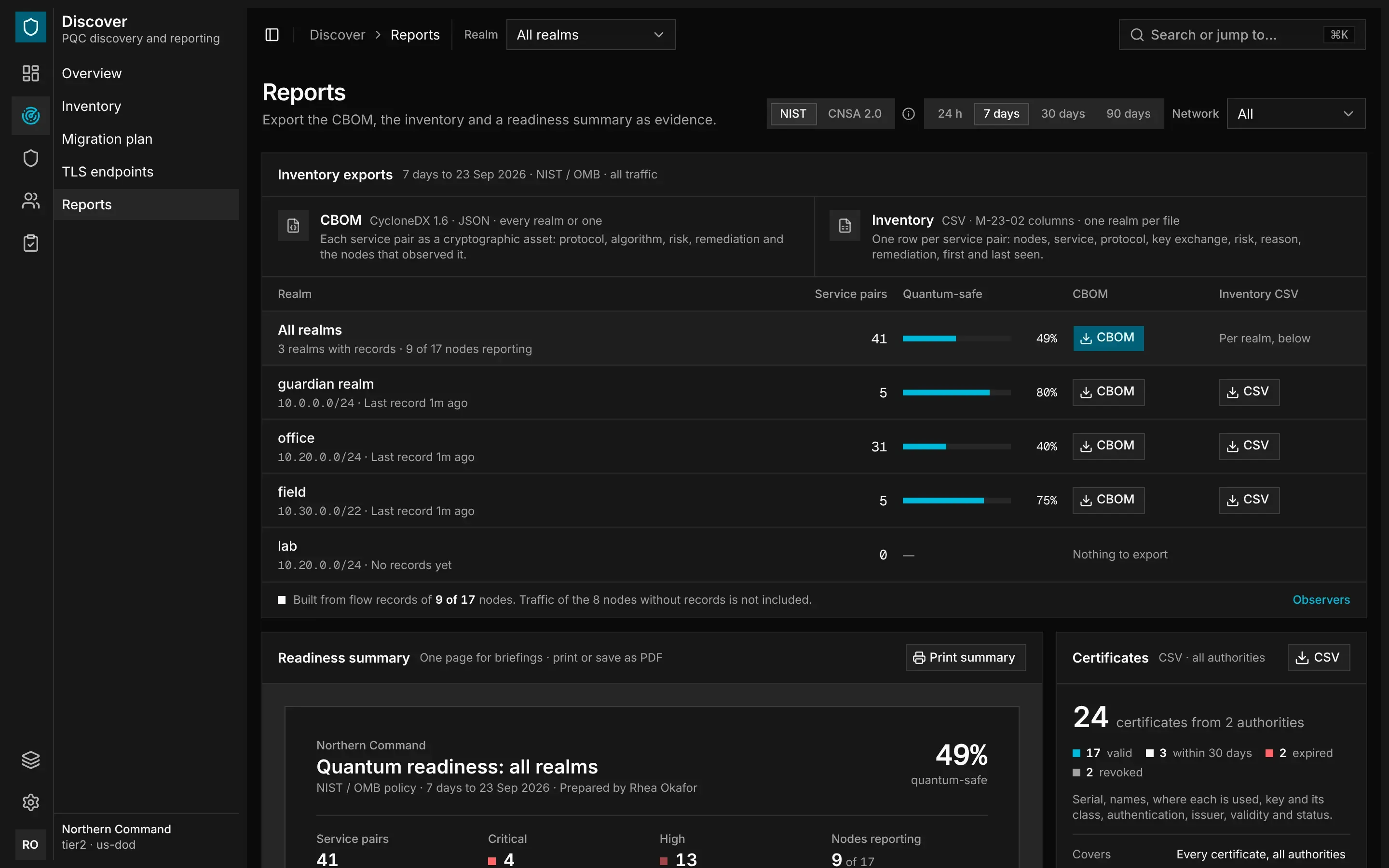
Quantum readiness across your fleet under NIST or CNSA 2.0 policy, broken down by service, protocol and key exchange, with top exposures and recent changes.
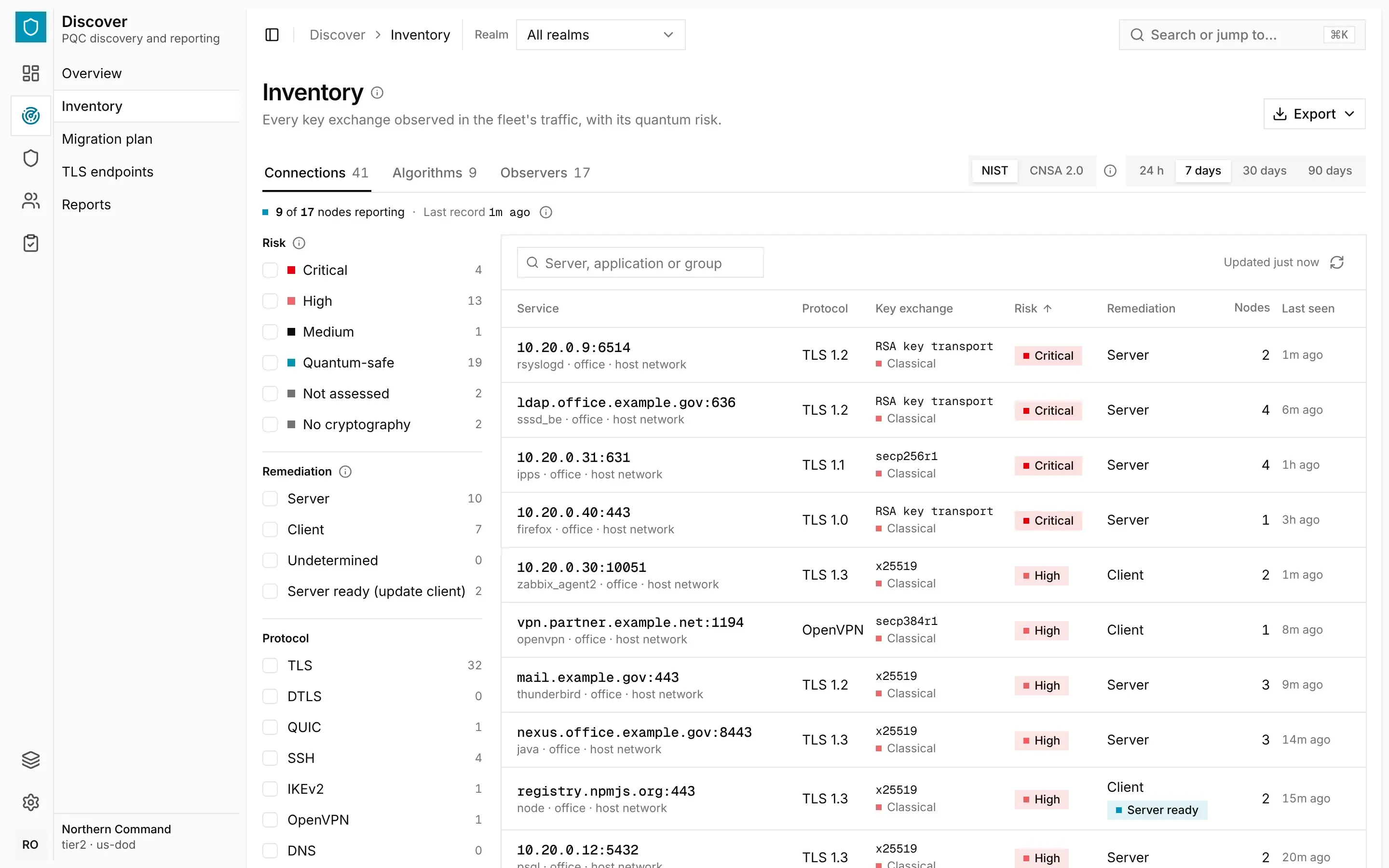
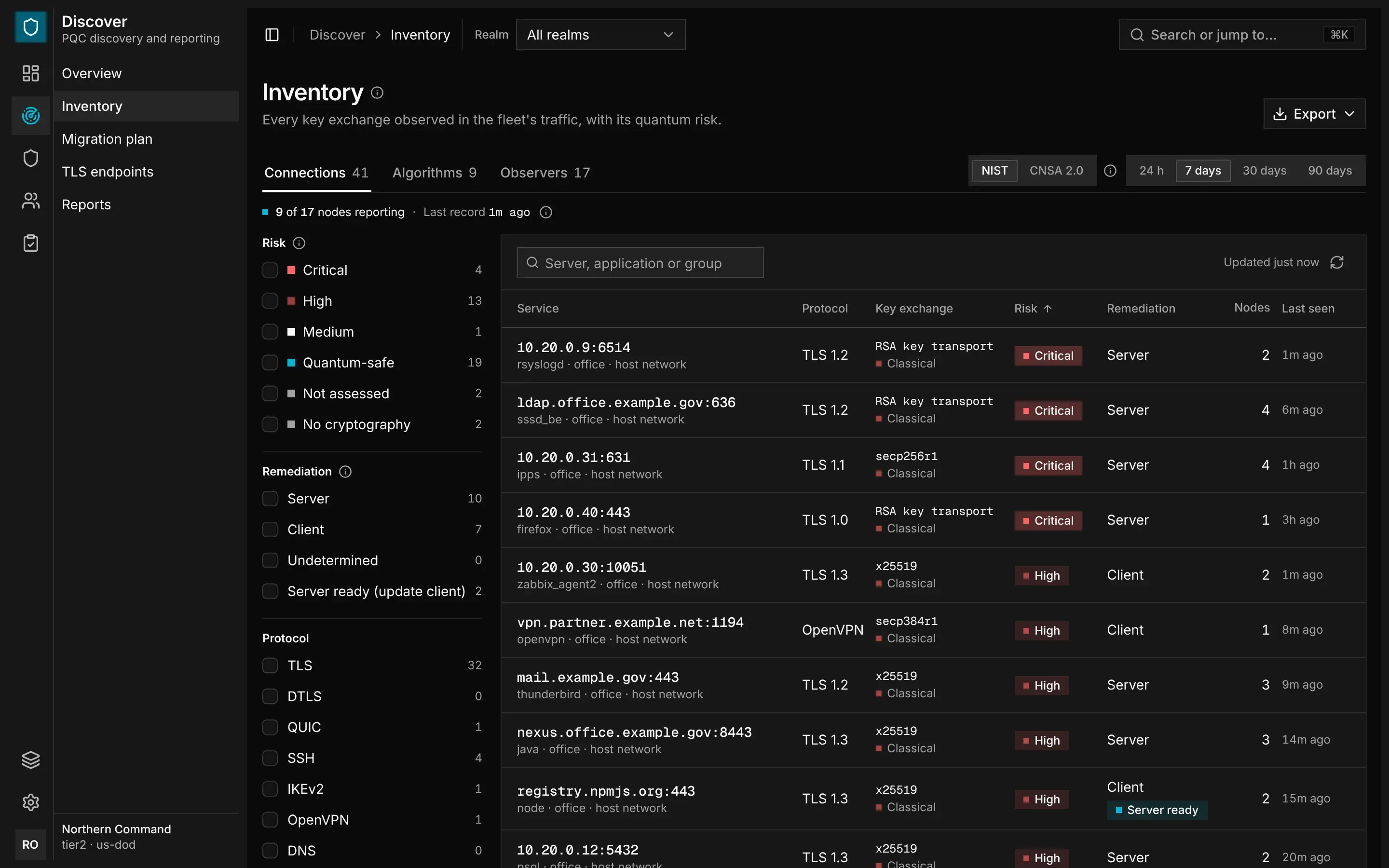
Every connection, ranked by quantum risk.
Each finding identifies whether the server or the client needs to change.
- Critical riskExposed nowPlaintext traffic, TLS 1.1 or earlier, RSA key transport or a SHA-1 SSH key exchange. Vulnerable today, without a quantum computer.
10.20.0.40:443 · TLS 1.0 · RSA key transport - High riskHarvest now, decrypt laterClassical key exchange such as ECDHE or X25519. Secure today, but traffic captured now can be decrypted once a cryptographically relevant quantum computer exists.
10.20.0.12:5432 · TLS 1.3 · x25519 - Medium riskPost-quantum, not NIST-standardsntrup761 and the pre-standard Kyber drafts, which are post-quantum but not FIPS 203. Under CNSA 2.0, this also includes NIST groups below ML-KEM-1024.
10.20.0.50:22 · SSH 2 · sntrup761x25519-sha512 - ML-KEM, standalone or hybridKey exchange using ML-KEM, the NIST FIPS 203 standard, on its own or combined with a classical group.
1.1.1.1:853 · TLS 1.3 · X25519MLKEM768
Observe, inventory, plan.
- Passive observationRun conflux observe on any host. It analyses a copy of each handshake, so it never touches live traffic and requires no enrolment.
- Inventory and CBOMconflux inventory lists every service observed, and -cbom exports it as a CycloneDX 1.6 cryptography bill of materials.
- Continuous monitoring--export streams every record to the guardian or your own OTLP collector, and the guardian probes each watched TLS endpoint every six hours.
- Prioritised migration planThe guardian rates every connection under NIST or CNSA 2.0 policy and groups those at risk into the changes that fix them, starting with immediate exposures.
Ready to see your cryptography clearly?
Talk to us about deploying observers on your network. Once you know where the gaps are, Protect closes them.